
The Resurrection of Zambia’s Lower Zambezi National Park
A feature on Conservation Lower Zambezi's decades-long anti-poaching and community work, helping restore the park after

Press Release Disclaimer: This is a press release distributed through the XPR Media network. It has not been independently verified by our newsroom.
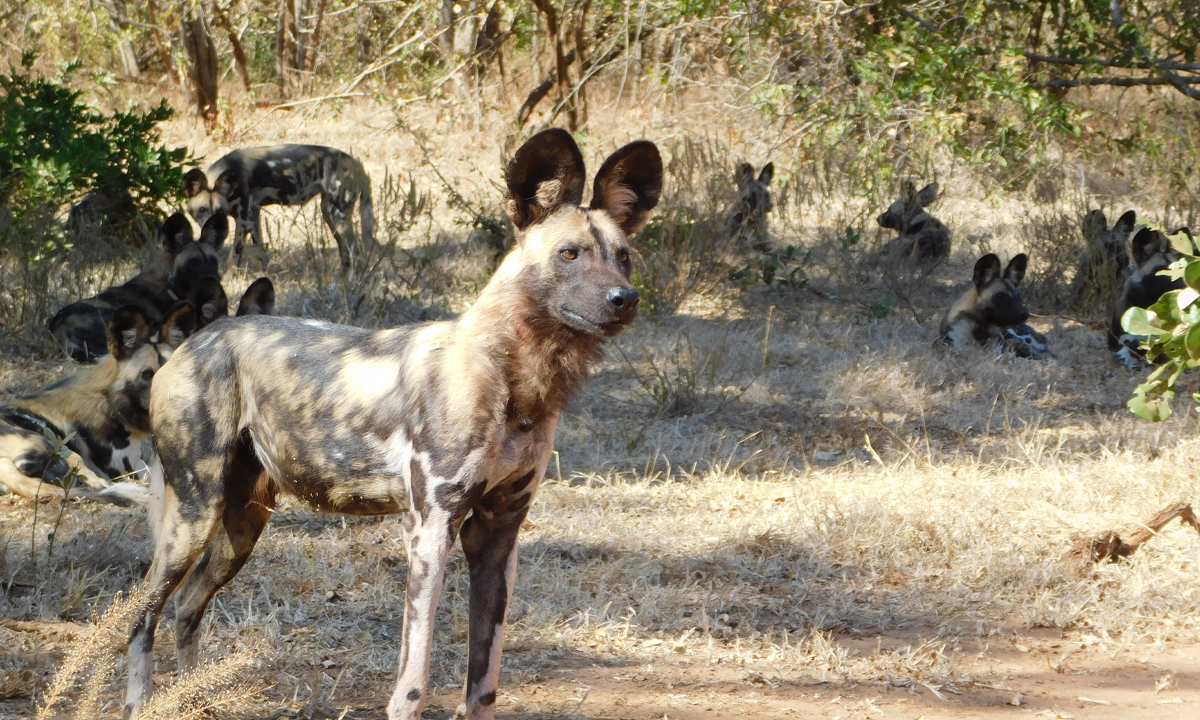

A feature on Conservation Lower Zambezi’s decades-long anti-poaching and community work, helping restore the park after 1980-90s poaching wiped out its rhinos.
CAPE TOWN, SOUTH AFRICA, September 15, 2026 /EINPresswire.com/ — During Discover Africa writer Thaakiera Ackerdien’s recent trip to Zambia’s Lower Zambezi National Park, morning light broke over the river in liquid gold as riverine birds lifted off the banks in sudden, synchronised arcs. A solitary elephant stood knee-deep in the water nearby, browsing the low-hanging branches of a winterthorn — an ordinary scene in a park nearly emptied of wildlife three decades ago. Conservation Lower Zambezi (CLZ) has restored that ecosystem, which lost its entire rhino population and up to 120 elephants a week to organised poaching syndicates in the 1980s and 1990s. CLZ now protects more than 20,000 square kilometres of the park and its surrounding Game Management Areas (GMAs), using K-9 tracking units, aerial patrols, and a river-based marine unit.
By the 1990s, the valley was becoming what conservationists called a silent forest: rhinos were gone, and even “Big Boy,” the largest elephant ever recorded in the region, had been killed by armed poachers. CLZ’s response — ground, aerial, and river patrols combined with community partnership — has since turned that silent forest back into a functioning ecosystem. Proof of that recovery recently rested in plain sight: during the same visit, a pack of African wild dogs — a sensitive indicator species — was found lounging undisturbed within view of CLZ’s own headquarters.
The Architecture of Defence
Bumpy tracks wind through winterthorn forests and stands of acacia, past termite mounds and bush that hums with birdsong. Zebra mingle with elephant herds, baboons chatter in the canopy, and impala dart through the shadows — though elephants hold the right of way, stepping across the tracks at their own leisure. That ease is deceptive: living alongside animals that don’t recognise the park’s boundaries has long created tension along its edges, compounded by a history of exploitation — the friction CLZ was built to address. The turnaround began in the 1990s, out of sheer necessity: following a tragic incident in which two community members lost their lives to an elephant, CLZ was formed at the request of the local Chieftainess. Formal operations gained momentum with an action plan in 1992, the recruitment of CLZ’s first full-time manager, Derek Gibbs, in 1997, and a permanent base camp the following year.
In 1999, CLZ acquired its first aircraft, launching regular aerial patrols across millions of acres. A memorandum of understanding with Zambia’s Department of National Parks and Wildlife (DNPW, formerly ZAWA) followed: under this public-private partnership, DNPW covers ranger salaries while CLZ supplies the logistical backbone. Today, CLZ’s strategy rests on four pillars — natural resource protection, human-wildlife coexistence, environmental education, and applied research.
Canine Guardians
During the same visit, arranged by Boundless Southern Africa, a K-9 handler and working dog demonstrated exactly how CLZ’s specialised unit operates. Operating in dense bush, where human sightlines are limited to a few metres, these tracking dogs rely on scent — trained to detect ivory, pangolin scales, rhino horn, bushmeat, cat skins, and firearms. Between deployments, the unit moves between trafficking hotspots in the park and surrounding GMAs, aiming to halt the movement of illegal wildlife products before they leave the region.
While ground teams and K-9 units cover the park’s interior, CLZ’s Marine Unit secures its aquatic border: the Zimbabwean side is 200 kilometres of protected parkland, while the Zambian bank is home to communities that rely on fishing. Operating in partnership with the Department of Fisheries, the Marine Unit patrols for illegal netting and interdicts wildlife contraband crossing the water.
Coexistence at the Frontier
Protecting wildlife requires working with the communities living along the park boundaries. Across the Game Management Areas, human-wildlife conflict remains an ongoing challenge as farming meets historical elephant corridors — though CLZ’s Finance and Projects Manager, Hanneke Hogerheijde, says this has changed significantly. “We are working on a plan with them for the area. So we can actually set up corridors and places so that people don’t live there so the elephants can pass,” says Hogerheijde.
Since 2004, CLZ’s Environmental Education programme has reached 72 government schools, embedding a conservation curriculum and training local teachers to be mentors — reaching about 3,500 children a year, hoping to build stewardship before poaching syndicates can target youth for recruitment. In 2021, CLZ established its first-of-its-kind Female Community Scout Unit, opening law enforcement careers that had previously been closed to local women.
That shift is visible in the field, too. “I saw many different animals in the GMA, especially in the areas where we used to cut trees,” says Hogerheijde. “It shows that there are fewer poaching activities happening in that area.”
This recovery is a major success, but the region continues to face ongoing pressures. Illegal bushmeat trade, opportunistic poaching, and human encroachment remain continuous challenges, and an open-cast mining licence granted inside the park presents a habitat threat, currently held at bay only by legal injunctions. Securing operational funding remains an ongoing effort, supported by tour operator memberships, corporate sponsors, and international donor grants.
The transformation of the Lower Zambezi from a poaching zone to a wildlife haven shows what targeted conservation partnerships can achieve — a model that extends well beyond this valley.
About Discover Africa Safaris
Discover Africa Safaris, co-founded by Andre Van Kets, is a Cape Town-based operator that builds tailor-made safari experiences across Southern and East Africa.
Photo credit: Thaakiera Ackerdien
PangeaGlobe on behalf of Discover Africa
Discover Africa
+1 332-242-4643
contact@pangeaglobe.com
Visit us on social media:
Instagram
Facebook
YouTube
Legal Disclaimer:
EIN Presswire provides this news content “as is” without warranty of any kind. We do not accept any responsibility or liability
for the accuracy, content, images, videos, licenses, completeness, legality, or reliability of the information contained in this
article. If you have any complaints or copyright issues related to this article, kindly contact the author above.

Media gallery

