Survey: Gen Z most receptive to political yard signs
UPrinting reports Gen Z is more responsive to political yard signs than older generations, with 22% influenced by them,

Press Release Disclaimer: This is a press release distributed through the XPR Media network. It has not been independently verified by our newsroom.

Shafkat Anowar // The Dallas Morning News via Getty Images
Survey: Gen Z most receptive to political yard signs
According to AdImpact, the 2026 election spending will reach a record high of $11.6 billion. The money shows that political advertisers are chasing the long-running assumption that younger voters live online, while older voters are looking through the mailbox.
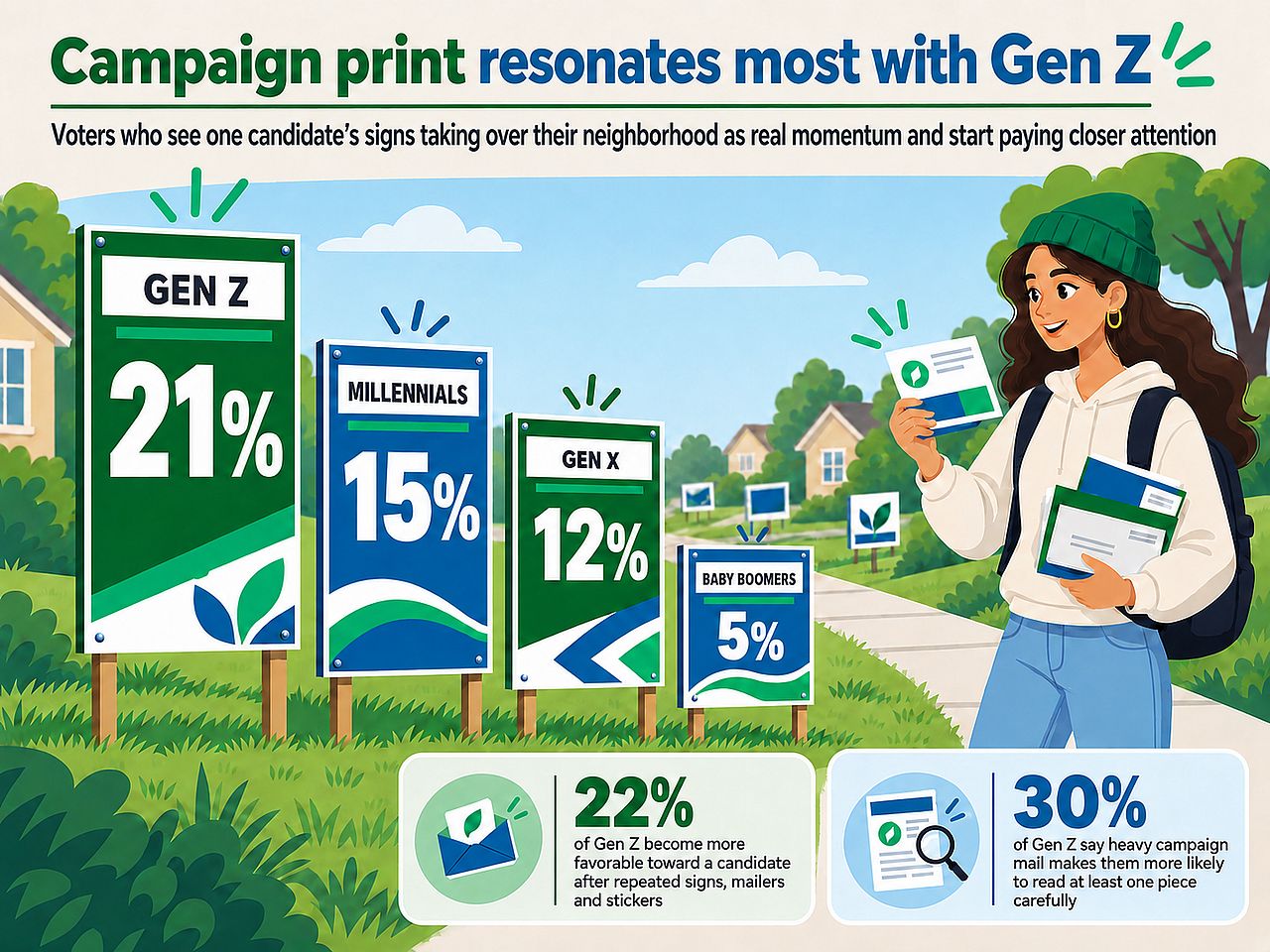
A new survey, however, shows Gen Z’s attention is elsewhere during campaign season. UPrinting’s 2026 study identifies physical materials as carrying the most influence in statewide races for the online generation. Over two in 10 (22%) of Gen Z found repeated signs, mailers, or bumper stickers made them more favorable toward a candidate. To put it in perspective, 43% of Baby Boomers said that the marketing materials had no effect on them, nearly twice the rate of Gen Z.
UPrinting
This is a giant shift in perspective in where the political industry assumes its audience is.
Methodology
Uprinting, an online printing site for marketing materials, commissioned a survey of 1,000 U.S. adults via Pollfish in August 2026. Respondents answered questions about yard signs, mailers, and other campaign marketing materials and how they influenced them. Uprinting also notes that results were unweighted and women make up 61% of respondents, and the sample skews younger than the U.S. adult population.
The state-level comparisons were gathered by grouping each state’s presidential results across the 2008 through 2024 elections. The respondents were never asked about their political affiliations or how they voted.
The Generational Standard Has Flipped
Typically, older generations can be counted on to support printed marketing materials. This survey says otherwise.
Uprinting asked its respondents what happens when one candidate’s signs take over a neighborhood. 21% of Gen Z said it signals real momentum and they would start paying closer attention.
That share falls as the age increases: 15% of Millennials, 12% of Gen X, and 5% of Baby Boomers said the same.
The same pattern shows when asked what carries the most influence in a campaign. 23% of Gen Z said physical materials do, versus 15% of Millennials and 8% of Gen X. Baby Boomers did not pick that option at all.
So Gen Z is paying attention. Does this mean they will participate in the yard signs declarations?
Gen Z Likes Yard Signs, Hates Talking About Politics
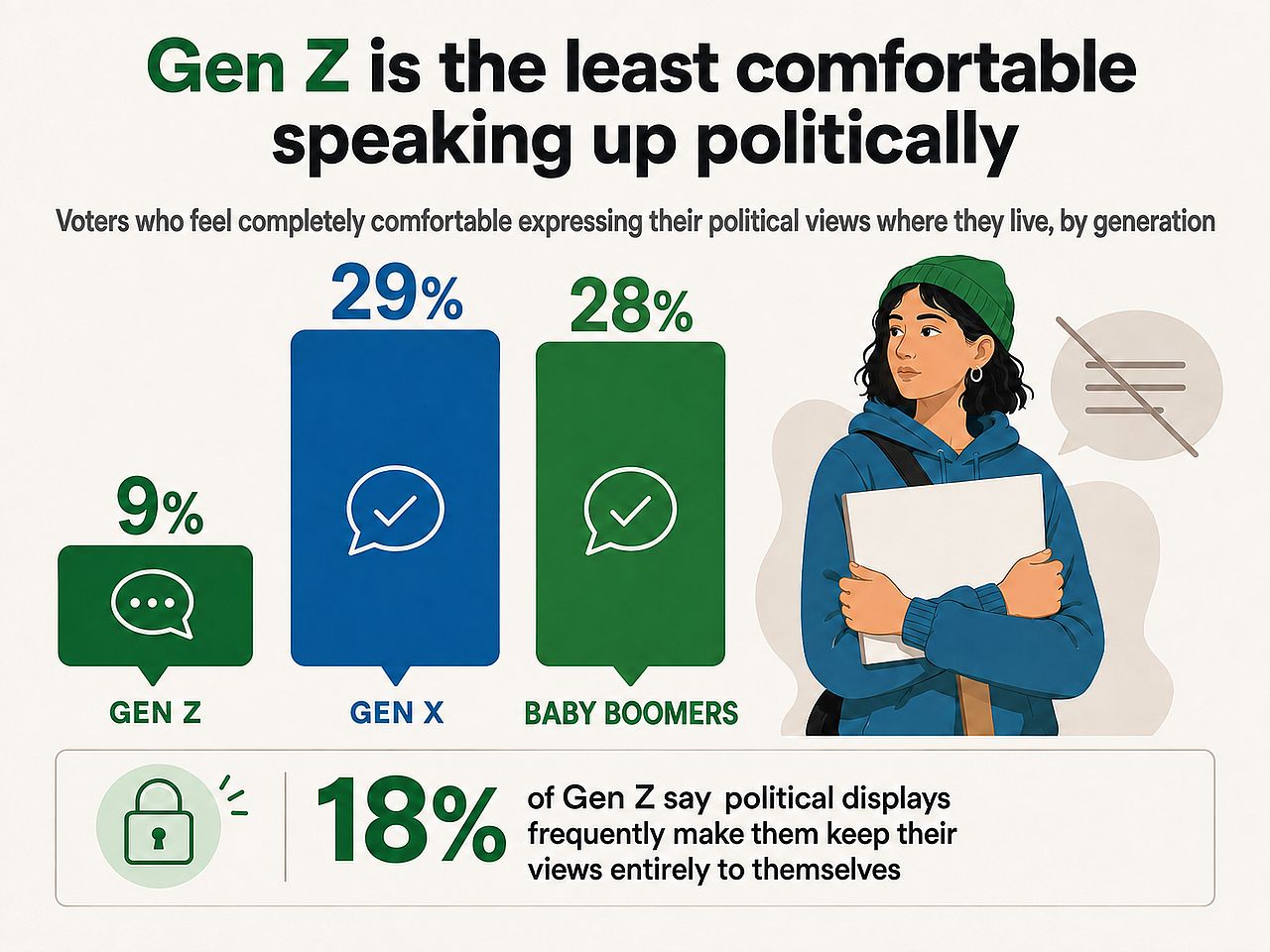
Although they are the most receptive to this type of campaign material, Gen Z is the least likely to express their political views where they live. Only 9% of the younger generation said they would be completely comfortable, versus 29% of Gen X and 28% of Baby Boomers (Millennials weren’t reported).
UPrinting
The reasons for Gen Z’s fears are as follows:
- 27% feared vandalism or property damage
- 21% feared a direct conflict with neighbors
- 15% feared consequences at work or in their social life
These are not made-up fears. In Gouldsboro, Maine, the Ellsworth American reported political signs were stolen and vandalized by unknown individuals on a private property along Route 1.
The fear is real, and where the pressure is the strongest makes all the difference.
The Silence Is Loudest in Swing States
UPrinting
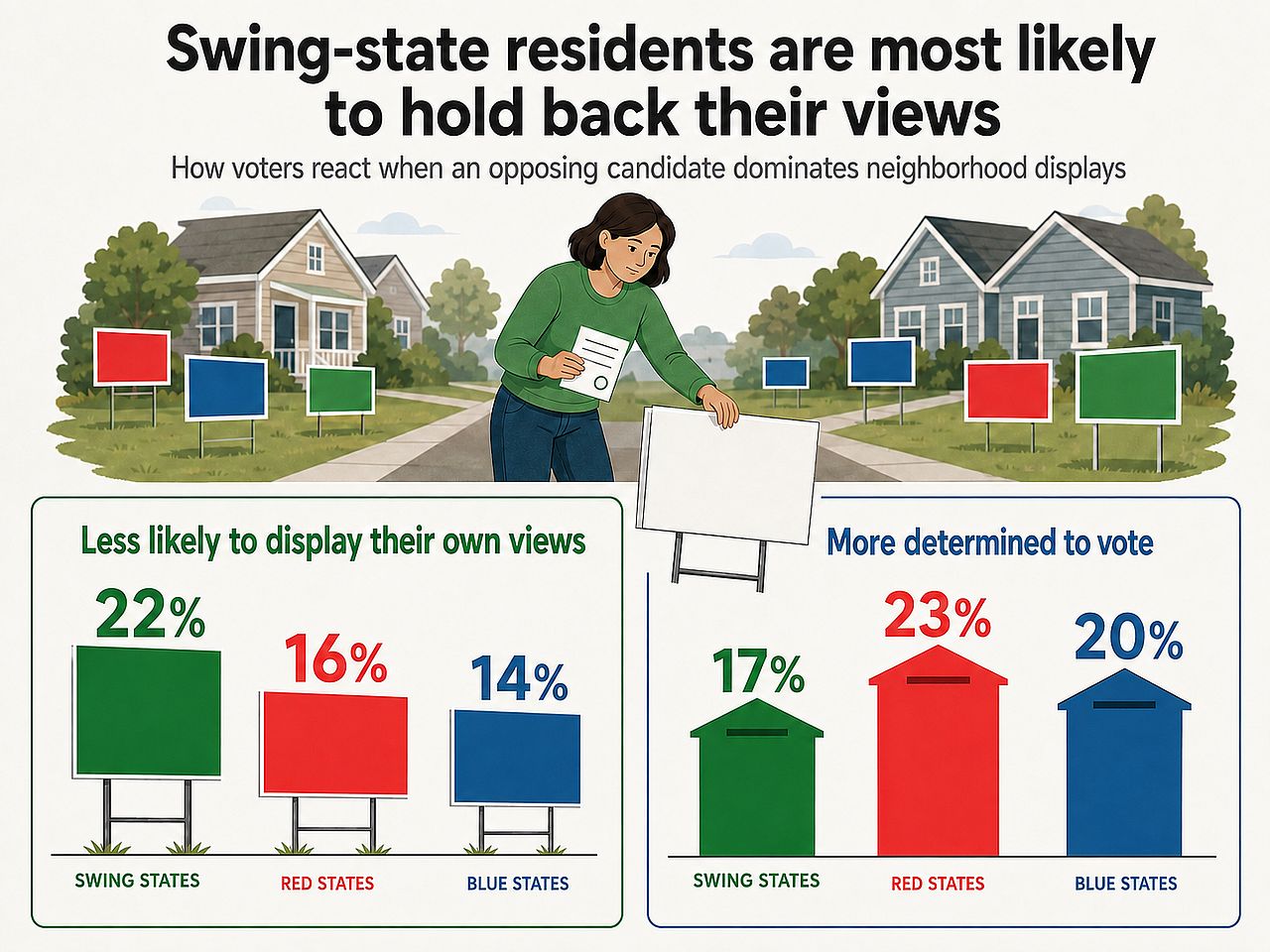
In swing states (states that flipped between political parties across 2008-2024 presidential results), more than two in 10 (22%) of residents said that opposing candidates dominating their neighborhoods made them more likely to keep quiet about their own political views. In reliably red states, that number is 16%, while in reliably blue states, that number is 14%.
This feeling follows them to the voting booth. Only 17% in swing states said seeing the opponent’s signs takeover made them more determined to vote, with 23% in red states and 20% in blue states.
Only 18% of respondents say they display their political views openly, even around opposing views. In swing states where the elections get decided, people are feeling unsafe to say and vote what they think.
Yard signs were supposed to be a way for people to express their opinions. Yet this survey says the opposite, suggesting they have partly become the reason people stay silent, especially in states where votes matter most.
This story was produced by UPrinting and reviewed and distributed by Stacker.