Bale Collision Center Highlights How In-House Auto Glass Repair Can Reduce Collision Repair Cycle Times
Little Rock, AR - November 18, 2026 - PRESSADVANTAGE - Bale Collision Center is sharing guidance explaining how

Press Release Disclaimer: This is a press release distributed through the XPR Media network. It has not been independently verified by our newsroom.

Little Rock, AR – November 18, 2026 – PRESSADVANTAGE –
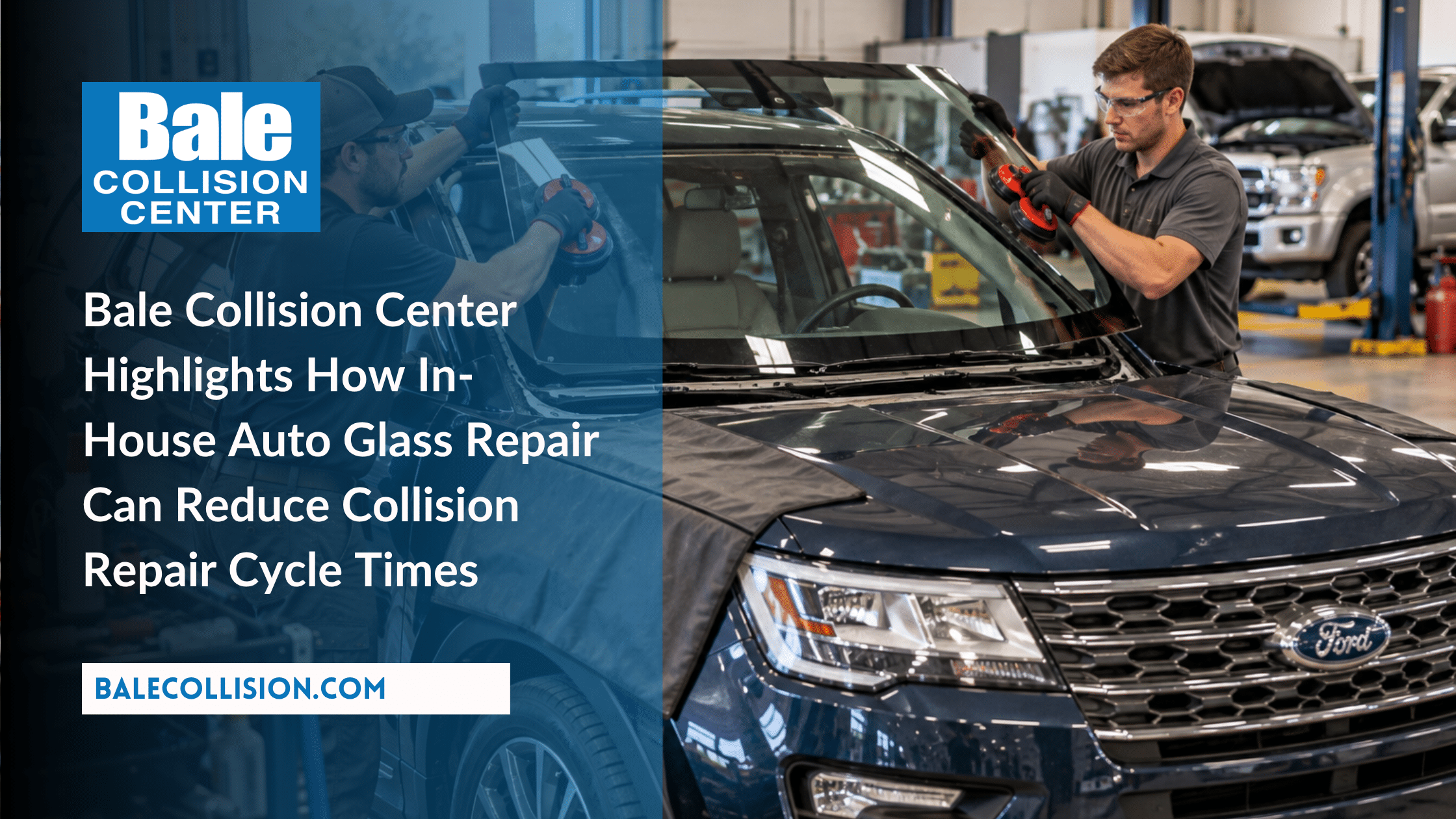
Bale Collision Center is sharing guidance explaining how in-house auto glass repair and replacement can help reduce collision repair cycle times by improving scheduling coordination, parts management, and communication between repair departments. The November publication focuses on how integrating glass services into the broader collision repair process can reduce certain delays associated with outsourcing while maintaining applicable installation and vehicle safety requirements.
Collision repair cycle time refers to the period required to complete a vehicle repair, commonly measured from when the vehicle enters the repair process until the work is finished. The total timeline can be influenced by damage severity, parts availability, insurance approvals, technician scheduling, and specialized services such as auto glass replacement.
When glass replacement is outsourced, a collision repair facility may need to coordinate an outside provider’s availability with other repair operations. Scheduling conflicts, parts delivery delays, and additional communication can affect when the vehicle is ready for the next stage of work.
Bale Collision Center provides auto glass replacement services as part of its automotive repair offerings. The November guidance explains how closer coordination between glass services and collision repair planning can create opportunities to reduce unnecessary waiting periods.
One potential advantage involves scheduling flexibility. When glass replacement is managed internally, the repair facility may have greater control over when the work is assigned and how it fits into the overall repair schedule.
For example, a vehicle requiring body repairs, refinishing, and windshield replacement may need those operations completed in a particular sequence. Coordinating the glass installation with the repair schedule can help avoid situations where completed body work is followed by an extended wait for an outside appointment.
However, the guidance emphasizes that in-house service does not automatically guarantee faster repairs. Technician availability, replacement glass inventory, equipment requirements, and the complexity of the repair can still affect completion times.
Parts coordination represents another consideration. Accurate glass identification and early ordering can help repair planners determine whether the necessary components will be available when installation is scheduled.
Modern vehicles may require windshields with specific camera mounts, heating elements, sensor provisions, or other features. Confirming the correct replacement part before installation can help reduce delays caused by incompatible components.
The November guidance also discusses communication between repair departments. When glass work is incorporated into the broader collision repair process, technicians and repair planners can coordinate component removal, body repairs, refinishing, and glass installation according to the vehicle’s repair requirements.
This coordination can be particularly relevant when a collision damages both the glass and surrounding body structures. Glass installation may need to wait until affected mounting surfaces or adjoining body components have been repaired.
Adhesive curing requirements must also be considered. After certain glass installations, the vehicle may need to remain stationary until the adhesive reaches the manufacturer-specified minimum safe drive-away time. This requirement cannot be shortened simply to improve repair cycle time.
Advanced Driver Assistance Systems introduce another important scheduling factor. Vehicles equipped with windshield-mounted cameras may require calibration after windshield replacement, depending on manufacturer procedures.
Bale Collision Center provides ADAS services for applicable vehicle systems. Coordinating required calibration with glass installation can help repair planners account for the full scope of work rather than treating windshield replacement as the final step in every case.
The November guidance explains that diagnostic scanning and calibration are separate procedures. A vehicle may require specific checks or calibration operations after glass replacement even when no warning light is displayed.
For collision repair facilities evaluating in-house glass services, the publication recommends examining actual workflow data. Useful measurements can include the time between glass ordering and delivery, waiting periods for installation appointments, delays between completed body repairs and glass installation, and the time required for any associated calibration procedures. Comparing these measurements before and after a change in service arrangements can help determine whether internal glass operations produce a measurable improvement in repair cycle time.
The guidance also distinguishes between reducing avoidable scheduling delays and shortening necessary repair procedures. Proper installation methods, adhesive curing, manufacturer instructions, and required safety system procedures remain essential regardless of whether glass work is performed internally or outsourced.
For Little Rock drivers, the central takeaway is that efficient collision repair depends on coordinating multiple stages of work. Bringing glass services into a repair facility’s internal workflow can potentially reduce certain scheduling dependencies, but actual completion times still depend on the vehicle, required repairs, parts availability, and applicable safety procedures.
Bale Collision Center provides collision repair, auto body repair, auto glass replacement, and related vehicle services at its Downtown location, 100 N Cross St, Little Rock, AR 72201.
###
For more information about Bale Collision Center, contact the company here:
Bale Collision Center (Downtown)
Jason Spiller
(501) 375-0910
jspiller@baleautomotive.com
100 N Cross St, Little Rock, AR 72201, United States